

South Africa Tax Compliance Checklist for Businesses
Navigating South Africa's tax system can feel complex, but staying compliant is crucial to avoid penalties and maintain your business's credibility. Here's a quick overview of what you need to know:
Missed deadlines or incomplete records can lead to fines, restricted operations, and lost opportunities. Prioritise compliance to protect your business and build trust with stakeholders.
SMME - Tax Compliance Made Easy
Business Registration and Corporate Tax Requirements
Registering your business with both CIPC and SARS is a must to operate legally in South Africa. Here's what you need to know.
How to Register with CIPC and SARS
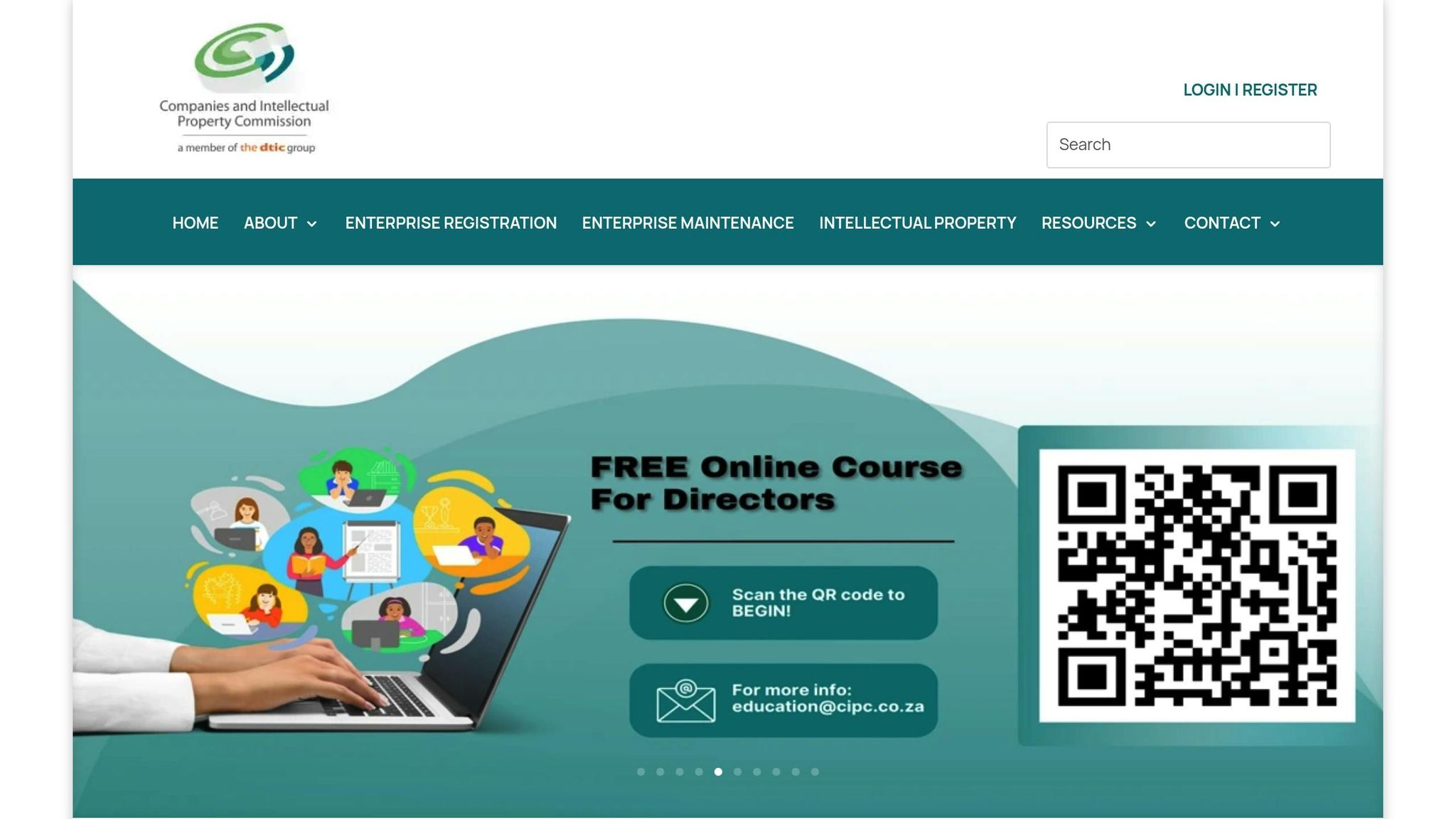
If your business isn't a sole proprietorship, you’ll need to register with the Companies and Intellectual Property Commission (CIPC). The first step is reserving your company name for exclusive use.
The CIPC registration process involves submitting incorporation documents and paying the required fees. Once approved, you’ll receive a company registration number and a certificate of incorporation. With this in hand, the next step is registering with SARS to get a tax reference number. This number consolidates your tax obligations, making it easier to manage corporate income tax, VAT, and payroll taxes. You can complete this step online using the SARS eFiling system.
Timing is crucial. Each year, you’re required to file annual returns with CIPC within 30 days of your registration anniversary. Missing this deadline can lead to penalties and even jeopardise your company’s standing.
If there are any changes to your business - like appointing or resigning directors, changing the company address, or transferring shares - these must be reported to CIPC within 10 business days. Additionally, your Beneficial Ownership information must be updated annually or whenever changes occur, and submitted alongside your annual return.
Once your registration and tax reference number are sorted, it’s time to focus on corporate income tax compliance.
Corporate Income Tax Rules and Filing
After registering, your company must adhere to corporate tax regulations by filing annual returns within 12 months of your financial year-end. Small Business Corporations (SBCs) may qualify for lower tax rates and easier compliance if they meet specific criteria, such as income limits and ownership conditions.
Keeping accurate records throughout the year is essential to meet deadlines. Depending on your estimated profits, you might also need to make provisional tax payments.
Once your tax returns are submitted, maintaining detailed records becomes vital for ongoing compliance.
Required Business Records and Documentation
Keeping proper records isn’t just smart - it’s the law. CIPC requires businesses to maintain statutory registers and records, including information about directors, shareholders, and company resolutions.
Your financial records should fully support your tax calculations. This includes general ledgers, bank statements, invoices, receipts, and contracts. SARS may audit your business, and incomplete documentation could result in penalties.
It’s also important to keep up-to-date records of directors, shareholders, and resolutions. Your company’s Memorandum of Incorporation (MOI), which acts as its constitution, must be kept current. Any amendments require approval and filing with CIPC.
To stay compliant, maintain statutory registers, financial ledgers, and digital backups that meet SARS and data protection standards.
Streamlining Compliance with Platformics

Managing all these requirements can be overwhelming, but services like Platformics simplify the process. They handle company formation, CIPC filings, and record maintenance. Their company formation service costs about £640, and ongoing accounting support starts at approximately £119 per month. With their help, you can focus on growing your business while staying compliant.
VAT Registration and Filing Requirements
Businesses are required to adhere to the South African Revenue Service (SARS) guidelines for VAT registration, filing, and maintaining accurate records. Always check SARS for the most up-to-date information on VAT registration processes and filing deadlines.
VAT Record-Keeping Requirements
Keeping accurate and well-organised VAT records is crucial for demonstrating VAT liability and ensuring smooth audits by SARS. Here’s what you need to know:
sbb-itb-9636a59
Employee Records and Payslip Requirements
Keeping detailed employee records is a key part of staying compliant with South African tax and labour laws.
Under South African tax regulations, businesses are required to maintain accurate payroll records - such as IRP5 or IT3(a) certificates - for a minimum of five years. On top of that, the Basic Conditions of Employment Act makes it mandatory for employers to provide regular payslips. These payslips must include all essential details about pay and deductions, ensuring transparency for employees.
It’s worth noting that record retention may need to go beyond the five-year mark if there’s an audit, investigation, or tax appeal in progress.
To make compliance easier, Platformics' payroll services help simplify record-keeping, aligning with the country’s tax and labour requirements.
Software and Services for Tax Compliance
Modern tools and expert services have made South African tax compliance much easier, especially when paired with strict registration and record-keeping practices. These solutions simplify processes and reduce the risk of errors.
How Compliance Software Helps Your Business
Compliance software and professional services work together to strengthen your tax processes. With integrated platforms, tasks like VAT, PAYE, UIF, and SDL calculations are automated, ensuring submissions are accurate and completed on time.
For example, payroll deductions are calculated using the latest tax tables, significantly reducing the chance of manual errors. Automated reporting features also simplify the preparation of SARS-required forms like VAT201 returns and EMP201 submissions. These tools pull data straight from your business transactions, formatting it to meet SARS requirements.
Another advantage is the electronic storage of audit trails and documentation. This makes it much easier to retrieve historical information when needed, especially during SARS audits.
By automating these processes, compliance software not only saves time but also ensures accuracy, setting the stage for selecting the right service provider to further enhance your compliance efforts.
How to Choose a Compliance Service Provider
When selecting a compliance service provider, it’s essential to choose one with extensive expertise in South African tax laws. Look for providers who can handle all SARS filings, from corporate income tax to payroll returns. Ideally, they should employ a team of experienced business tax consultants, legal professionals, and accountants who are well-versed in local regulations. This is particularly important given how frequently South African tax laws change.
Another key service to consider is thorough auditing. Reliable providers review your tax filings in detail to identify potential risks or inaccuracies before they escalate into penalties or prolonged audits. This proactive approach can save your business from unnecessary complications.
Additionally, some providers go beyond filing returns and offer advice on structuring your operations in a tax-efficient way. These experts can guide you on legitimate strategies to optimise your tax position while staying fully compliant with South African regulations.
For instance, Platformics offers a comprehensive compliance package for £149 per month. This includes bookkeeping, tax filing, payroll processing, and ongoing compliance support. Their integrated approach ensures your records are accurate and your tax obligations are met without hassle.
The benefits of professional compliance services extend far beyond avoiding fines or legal troubles. With expert guidance, you can navigate complex tax challenges, ensuring you pay the correct amount - no more, no less. This clarity and peace of mind allow you to concentrate on growing your business, free from the stress of tax compliance.
Summary and Next Steps
Staying on top of tax compliance in South Africa demands a structured and diligent approach. From registering with CIPC and SARS to handling monthly and annual filings, every step plays a role in maintaining a solid compliance framework.
Key deadlines are critical to your compliance strategy. For instance, the ITR14 must be submitted within 12 months of your financial year-end. Similarly, monthly EMP201 filings are due by the 7th of each month, and VAT201 returns must be completed by the 25th. Missing these deadlines can result in hefty administrative penalties.
To stay ahead, take immediate action using SARS eFiling. Start by reviewing your My Compliance Profile (MCP) on the platform. This tool provides real-time insights into your compliance status, enabling you to pinpoint and resolve any gaps before they lead to penalties or audits.
Accurate record-keeping is the cornerstone of effective tax compliance. Whether you handle this internally or enlist professional help, keeping detailed financial records is essential to avoid unnecessary complications down the line. Proper documentation not only ensures smooth operations but also keeps you aligned with legal obligations.
For businesses seeking extra support, professional services can offer more than just filing assistance. As highlighted by SME South Africa:
"It's best to work with an experienced business tax consultant to ensure you pay the correct taxes for your business. This can also help you structure and run your business in the most tax-efficient way".
Investing in compliance tools or professional services, such as Platformics' £149 monthly package, can significantly reduce risks and ensure accurate filings.
Looking ahead, focus on proactive measures to streamline your compliance efforts. Create a detailed compliance calendar marking all critical deadlines, verify that your public officer appointment is current, and assess whether your systems meet your growing compliance requirements. These steps, combined with the earlier-discussed registration, filing, and record-keeping practices, will help you maintain seamless compliance while positioning your business for sustainable growth in the South African market.
Key Takeaways
- Businesses must register with both CIPC and SARS to operate legally in South Africa, which allows them to obtain a tax reference number covering corporate income tax, VAT, and payroll taxes.
- Companies need to track three core tax categories, namely Corporate Income Tax, VAT, and payroll related taxes such as PAYE, UIF, and SDL, since each comes with its own compliance rules.
- It is important to meet key deadlines, including CIPC annual returns within 30 days of the registration anniversary, the ITR14 within 12 months of financial year end, VAT201 by the 25th, and EMP201 by the 7th of each month.
- Businesses should keep financial, VAT, and payroll records such as invoices, receipts, and payslips for at least five years, and even longer if they are under audit by SARS.
- Any changes to the company, such as new directors or a change of address, must be reported to CIPC within 10 business days, while beneficial ownership information needs to be updated annually.
- Using compliance software or professional services can help automate tax calculations, reduce filing errors, and keep documentation ready for potential SARS audits.
- Businesses should stay proactive by regularly checking their SARS Compliance Profile and maintaining a compliance calendar to track all upcoming deadlines.
Related Blog Posts
- Work Permit Requirements South Africa: Complete Guide
- Employer of Record vs Local Entity: Key Differences
- High Labor Costs? South Africa Expansion Solutions
- 5 Ways to Cut Payroll Costs in South Africa

Lavonne Nolan

Categories



.jpg)
