

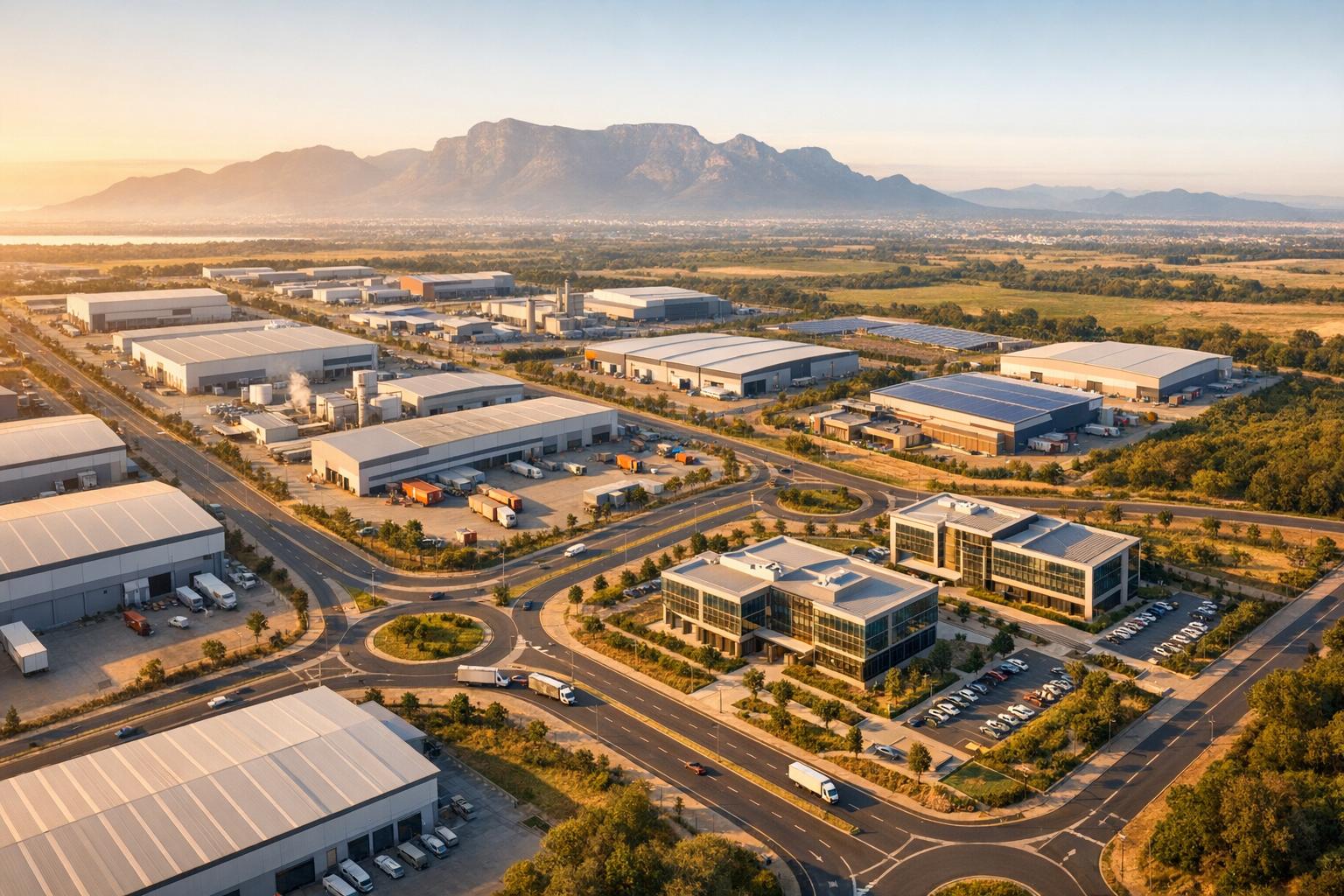
Challenges and Solutions for SEZ Investors in South Africa
South Africa's Special Economic Zones (SEZs) offer businesses lower tax rates, customs relief, and access to growing African markets. However, investors face hurdles like regulatory confusion, power outages, and skills shortages. Here's a quick overview of the main points:
Key Challenges:
- Regulatory Complexity: Unclear rules and fragmented processes make compliance difficult.
- Infrastructure Issues: Load shedding disrupts operations and increases costs.
- Skills Gaps: A shortage of specialised labour affects productivity.
- Currency Volatility: The fluctuating rand impacts financial planning.
Solutions:
- Use the One-Stop-Shop service to simplify permits and compliance.
- Invest in on-site power solutions to mitigate energy disruptions.
- Leverage tax incentives like the 15% corporate tax rate and Employment Tax Incentive.
- Partner with experts for regulatory advice and local workforce management.
Choosing the Right SEZ:
Match your sector to the SEZ focus:
- Atlantis: Renewable energy.
- Coega: Automotive and energy.
- Dube TradePort: Logistics and light manufacturing.
South Africa’s SEZs provide opportunities for growth, but success depends on careful planning and expert support.
Factors contributing the success of SEZ’s
Common Challenges in South Africa's SEZs
While South Africa's Special Economic Zones (SEZs) offer appealing incentives and strategic locations, investors often face a range of challenges that can complicate operations.
Policy and Regulatory Uncertainty
Navigating South Africa's legal and regulatory framework can be a daunting task for investors. Various laws such as the Income Tax Act, VAT Act, Customs and Excise Act, and the Employment Tax Incentive Act each outline different criteria for tax and customs benefits. Adding to the complexity, Section 39 of the SEZ Act of 2014 required all Industrial Development Zones to transition into SEZs within three years, further complicating matters for businesses trying to understand their obligations and benefits.
Although the SEZ Act promises significant tax breaks, the lack of clear and finalised guidelines often leaves investors in limbo about eligibility requirements.
Mmiselo Freedom Qumba, a lecturer at the University of the Free State, describes SEZs as "carved out jurisdictions within the overall jurisdiction of a state in order to introduce different laws and regulations that are usually more trade and investment friendly".
Despite the establishment of "one-stop shops" aimed at streamlining government services, issues like licensing delays and fragmented coordination persist. These centres, while helpful in theory, still fall short of addressing the broader regulatory uncertainty. To stay updated, investors are advised to frequently check resources like the National Treasury and SARS websites, as regulations evolve continually. Unfortunately, these ongoing ambiguities add to the operational risks already faced by businesses.
Infrastructure and Utility Reliability
Beyond policy hurdles, the reliability of infrastructure and utilities presents a major obstacle. Load shedding - South Africa's term for scheduled power outages - remains one of the most disruptive issues for businesses. These blackouts lead to lost revenue, reduced productivity, and supply chain disruptions, particularly for industries reliant on just-in-time manufacturing.
South Africa's infrastructure challenges also hinder economic growth and recovery efforts post-COVID. Issues like service rationing and congestion have caused actual economic performance to lag behind projections. The country’s energy crisis, coupled with the financial strain of state-owned enterprises, has led to its credit rating being downgraded to sub-investment grade by Moody's, Fitch, and S&P.
While the World Bank estimates that investing £1 in resilient infrastructure could save up to £4 in future recovery costs, ongoing failures have forced many businesses to seek private solutions, such as generators and independent power sources.
Skills Gaps and Local Integration
Finding a skilled workforce is another significant challenge. There is often a mismatch between the local labour market and the technical expertise required by high-tech and high-value manufacturing sectors. This issue is particularly pronounced in remote or specialised zones focused on industries like minerals or maritime operations.
The relationship between investment levels and job creation is also highly sector-dependent. For example, capital-intensive industries like automotive manufacturing or mineral processing tend to require fewer workers, but those roles demand specialised skills. As of 2023, the Richards Bay SEZ managed to attract R1.94 billion in investment but generated only 147 direct jobs. In contrast, the Coega SEZ created 10,527 direct jobs from R11.52 billion in investments.
Another challenge lies in integrating SEZ activities with local supply chains. Without such integration, economic activities risk being isolated, failing to deliver broader benefits like technological advancements for the local economy.
Research published in ScienceDirect highlights that "African SEZ programmes that have a well-targeted strategic focus, promote institutional collaboration and take a proactive approach to create linkages with the local economy are more likely to succeed".
Currency and Financial Risks
The fluctuating value of the South African rand adds another layer of uncertainty, particularly for UK investors. Exchange rate volatility can significantly affect profit margins, especially for businesses importing equipment or raw materials while earning revenue in rand. Additionally, navigating South Africa’s intricate tax framework complicates financial planning. Although the preferential 15% corporate tax rate can offer savings, understanding and complying with multiple tax acts remains a challenge.
Securing financing for large-scale projects is also a hurdle. While the SEZ Fund provides multi-year funding for bulk infrastructure, it excludes costs associated with residential buildings, office parks, and general infrastructure outside the designated zones. This means investors must find additional capital in a financial environment where South Africa’s sub-investment grade credit rating adds further complications.
Despite these challenges, South Africa remains a destination for foreign investment, with U.S. Foreign Direct Investment reaching $7.4 billion in 2022. However, this figure reflects a cautious approach by investors navigating the financial and operational uncertainties in the region.
Solutions for SEZ Investors
Managing Policy and Regulatory Hurdles
The Department of Trade and Industry (the dtic) offers a One-Stop-Shop service through Trade and Investment South Africa (TISA). This service is designed to help investors overcome bureaucratic challenges like residency permits, land zoning, and licensing delays, making the process smoother and faster.
To make the most of SEZ incentives, ensure you have written agreements confirming eligibility for the 15% corporate tax rate. The SEZ technical advisory team can assist with feasibility reviews, due diligence, and guidance on Public-Private Partnerships (PPP). Additionally, registering your premises as a Customs Controlled Area (CCA) Enterprise with the South African Revenue Service (SARS) unlocks VAT and customs duty relief.
For UK investors navigating South Africa’s legal landscape, professional advisory services - such as those provided by Platformics - can simplify compliance, company formation, and regulatory monitoring. Staying updated on legislative changes is key to avoiding setbacks.
These steps can help streamline operations and set a strong foundation for growth.
Building Infrastructure and Operational Resilience
With load shedding posing a persistent challenge, consider investing in on-site power solutions and renewable energy to ensure uninterrupted operations. SEZ technical advisory services can also assist in reducing utility costs and implementing renewable energy solutions to stabilise operations.
Allocating around 3% of your investment to resilience measures can go a long way in maintaining operational stability. The SEZ Fund offers multi-year capital for bulk infrastructure projects, leveraging third-party investments to improve supply chain efficiency. Investors can also explore PPP models to manage infrastructure development, such as land assembly and utility systems.
Choosing SEZs with dedicated infrastructure for specific industries can provide additional benefits. For example, Atlantis focuses on greentech, while Saldanha Bay specialises in oil and gas.
Solving Skills and Labour Challenges
To address labour and skills shortages, take advantage of incentives like the 12I Tax Incentive and Employment Tax Incentive, which help offset capital and training costs while lowering labour expenses. For foreign-owned companies, programmes such as Equity Equivalent Investment Programmes (EEIP) and Employee Share Ownership Programmes (ESOP) align with Broad-Based Black Economic Empowerment (B-BBEE) requirements, supporting skills development and social impact initiatives.
"African SEZ programmes that have a well-targeted strategic focus, promote institutional collaboration and take a proactive approach to create linkages with the local economy are more likely to succeed." – ScienceDirect
Platformics offers Employer of Record and payroll services, making it easier to build a local workforce without needing to establish a full legal entity [platformics.io]. Strengthening local connections through sourcing and supplier development initiatives enhances the economic impact of SEZ investments while addressing skills gaps and labour inefficiencies.
Reducing Financial and Currency Risks
To safeguard your returns in uncertain financial climates, consider currency hedging, tax scenario planning, and a balanced mix of debt and equity financing. Conduct tax scenario analyses to fully understand how the 15% corporate tax rate applies to your business. Align your project financing with available grants and development finance options by leveraging the SEZ Fund and applying for the 12I Tax Allowance for Greenfield and Brownfield projects.
For infrastructure investments, combine debt and equity to fund "top structures" like buildings, machinery, and equipment within the SEZ. However, note that the SEZ Fund may not cover all costs, so securing additional capital is essential.
Platformics’ accounting services can simplify bookkeeping, financial statement preparation, tax filing, and compliance, helping UK investors navigate South Africa’s complex tax system while maintaining accurate financial records [platformics.io].
sbb-itb-9636a59
Choosing the Right SEZ for Your Business

South Africa SEZ Comparison: Sectors, Locations and Strategic Advantages
What to Consider When Selecting an SEZ
When picking a Special Economic Zone (SEZ), it’s essential to match the zone’s focus and infrastructure to your business needs. For instance, Atlantis specialises in Greentech and renewable energy, making it an ideal choice for businesses in those sectors. A great example is Gestamp Renewable’s R300 million investment there, which highlights the zone’s clear alignment with this industry. Similarly, TASEZ has earned its reputation as Africa’s first automotive city, catering specifically to automotive manufacturers and suppliers.
Logistics play a major role too. Take Dube TradePort, for example. Its integration with King Shaka International Airport makes it a prime spot for handling lightweight, high-value goods like electronics and fashion. Futurelife capitalised on this advantage in 2023 by investing R75 million in a manufacturing facility there, benefiting from the zone’s export capabilities. For heavier manufacturing, Coega and Richards Bay are better suited, offering deepwater port access. Wilmar’s multi-billion rand edible oils refinery at Richards Bay is a clear example of how industries can leverage these facilities. If your focus is on accessing the Southern African Development Community (SADC) markets, Musina-Makhado is strategically located along the N1 route near Zimbabwe, providing direct links to the region.
It’s also crucial to confirm whether your business qualifies for the 15% corporate tax rate, as certain activities like tobacco, spirits, and some financial services are excluded. To maximise benefits, check if the SEZ is designated as a Customs Controlled Area (CCA), which provides VAT and customs duty relief on imported raw materials and machinery. Infrastructure readiness varies across SEZs - some offer "plug-and-play" facilities with pre-serviced utilities, while others may require you to invest in additional resources like energy. For example, Gauteng has secured 1,000 MW of off-grid energy for its SEZs to address power challenges.
| SEZ Name | Primary Sector Focus | Strategic Location Advantage |
|---|---|---|
| Atlantis | Greentech / Renewable Energy | 40 km from Cape Town; West Coast access |
| Coega | Automotive, Agro-processing, Energy | East–West trade route; deepwater port |
| Dube TradePort | Electronics, Fashion, Agri-processing | Integrated with King Shaka International Airport |
| OR Tambo | Precious Metals / Jewellery | Adjacent to OR Tambo International Airport |
| TASEZ | Automotive | Africa's first automotive city; near Pretoria |
| Musina-Makhado | Metallurgy, Petrochemical, Agro-processing | N1 North–South route; Zimbabwe border |
| Richards Bay | Minerals, Energy, Aluminium | Link to Maputo Corridor and deepwater port |
| Saldanha Bay | Oil, Gas, Marine Repair | Servicing Sub-Saharan oil and gas fields |
Choosing an SEZ that meets both your operational requirements and regulatory needs can help you avoid potential challenges while taking advantage of South Africa's trade opportunities.
Using South Africa as a Regional Hub
South Africa’s SEZs aren’t just about local benefits - they’re gateways to broader African markets, thanks to the Southern African Development Community (SADC) and the African Continental Free Trade Area (AfCFTA). Zones like Musina-Makhado and Nkomazi are perfectly positioned on key transport corridors, making them ideal for regional distribution. For instance, Nkomazi SEZ sits between northern Eswatini and southwestern Mozambique, providing direct access to the Maputo Corridor.
"Special Economic Zones (SEZs) are growth engines towards government's strategic objectives of industrialisation, regional development and employment creation." – International Trade Administration
Port-based SEZs like Coega and Richards Bay connect seamlessly to east–west trade routes, supporting both global exports and strong regional supply chains. Saldanha Bay IDZ, for example, has secured over R21 billion in investments by positioning itself as a service hub for Sub-Saharan Africa’s oil and gas industries. Meanwhile, Maluti-A-Phofung serves as a critical logistics base, facilitating freight transfers between road and rail for businesses targeting Gauteng’s industrial regions.
With these advantages, businesses can tap into South Africa’s regional trade potential, but expert guidance is essential to navigate the complexities.
Platformics as Your Partner

Making the right SEZ choice and setting up operations can be challenging, but that’s where Platformics steps in. They provide end-to-end business solutions tailored for companies entering South Africa’s SEZs, helping with everything from strategic SEZ selection to operational setup. Their services include:
- Company formation (starting at £599): Ensures compliance with all regulatory requirements for SEZ qualification.
- Employer of Record services (from £299/month): Enables you to build a local workforce without establishing a full legal entity.
- Accounting services (from £112/month): Handles financial compliance, including eligibility for the 15% corporate tax rate.
- Work permit applications (from £1,124): Simplifies the process of securing permits for your team.
- Payroll services (from £37/month): Streamlines employee compensation (platformics.io).
Platformics’ accounting services are particularly useful for managing SARS compliance and preparing financial statements, ensuring you remain eligible for tax benefits tied to Customs Controlled Area registration. For UK investors unfamiliar with South Africa’s regulatory framework, their dedicated support removes the guesswork, allowing you to focus on scaling your business.
Conclusion: Managing Challenges for Long-Term Growth
South Africa's Special Economic Zones (SEZs) come with attractive incentives, but they also bring a set of challenges that require careful navigation. To access benefits like the 15% corporate tax rate and other incentives, investors must strictly adhere to SEZ criteria and complete proper Customs Controlled Area registration. Missing these requirements means losing out on key advantages. This makes a thorough understanding of the regulatory landscape essential.
Choosing the right SEZ for your industry is a critical step. For instance, Atlantis is ideal for Greentech, Coega supports the automotive sector, and Dube TradePort specialises in logistics. Aligning your business with the strengths of a specific SEZ provides a solid platform for growth. Success in these zones often hinges on strategic planning, collaboration with institutions, and building strong connections with the local economy.
To turn these challenges into growth opportunities, partnering with experts can make a big difference. Local specialists can help navigate bureaucratic hurdles and streamline the setup process. For example, InvestSA's "One Stop Shop" service can assist with critical needs like residency permits and land zoning, cutting down on delays. For UK investors unfamiliar with South Africa’s complex regulations, working with professionals who understand B-BBEE requirements, SARS compliance, and SEZ-specific rules simplifies the process considerably.
Comprehensive support is essential to overcoming these obstacles - and this is where Platformics steps in. Their services cover everything from company formation (starting at £599) to employer of record solutions (from £299/month) and accounting services (from £112/month). They also offer work permit assistance (from £1,124) and payroll solutions (from £37/month), helping you build and manage a local team without getting bogged down in administrative tasks. With their in-depth knowledge of South Africa's SEZ framework, Platformics ensures that investors can focus on growth while they handle the complexities. Their expertise transforms challenges into opportunities for sustainable, long-term success.
FAQs
What are the best ways for investors to handle regulatory challenges in South Africa's SEZs?
Navigating the regulations surrounding South Africa’s Special Economic Zones (SEZs) starts with a solid understanding of the Special Economic Zones Act 16 of 2014. This legislation sets out the framework for SEZ designation, governance structures, and operator permits. Key benefits, like the preferential 15% corporate tax rate, building allowances, and the Employment Tax Incentive, are directly linked to compliance with this Act and the Income Tax Act. Additionally, it’s essential for investors to get acquainted with the South African Revenue Service (SARS) registration process, especially for SEZ operators and customs-controlled areas.
Partnering with a specialist provider such as Platformics can make this process much simpler. They provide a range of services, including company registration, payroll management, work permits, and SEZ registration filings. By ensuring compliance with local tax and customs requirements, Platformics allows businesses to focus on growth while taking full advantage of the SEZ’s tax benefits and strategic opportunities.
What are the most effective ways to manage power outages in South Africa’s SEZs?
Power outages, commonly referred to as load-shedding in South Africa, create significant hurdles for businesses in Special Economic Zones (SEZs). However, companies can mitigate these challenges by employing a mix of practical strategies:
- On-site renewable energy: Installing solar panels or similar renewable systems, combined with battery storage, can reduce reliance on the national grid and offer a dependable backup during power cuts.
- Backup generators: Diesel or gas-powered generators can keep essential operations running smoothly during outages.
- Demand-side management: By utilising smart meters and aligning operations with load-shedding schedules, businesses can reschedule non-essential tasks to off-peak periods, minimising disruptions.
Additionally, aligning with South Africa’s Energy Action Plan - which promotes renewable energy expansion and increased generation capacity - can unlock incentives for on-site energy projects. By embracing these approaches, SEZ investors can create a stronger, more reliable energy strategy to handle the challenges of load-shedding.
How can I select the best SEZ in South Africa for my business sector?
To select the most suitable Special Economic Zone (SEZ) in South Africa for your business, start by focusing on zones that cater to your industry. Each SEZ is designed with specific sectors in mind. For instance, the Coega SEZ in the Eastern Cape is a hub for logistics, automotive, and manufacturing industries, while the Saldanha Bay SEZ in the Western Cape specialises in oil refining, petrochemicals, and maritime services. Evaluate the incentives on offer, such as a reduced corporate tax rate of 15%, building allowances, and customs-controlled areas, alongside the infrastructure available in each zone.
Practical considerations should also guide your choice. Look into the zone's proximity to major ports, availability of skilled workers, reliability of utilities, and the presence of industry clusters. These factors can significantly impact your operations and future growth. If possible, arrange a site visit or virtual tour to assess the infrastructure, such as road and rail connections or power supply, to ensure it meets your needs.
Partnering with a local expert can streamline the process. Platformics provides a range of business services, including company registration, payroll management, work permits, and banking solutions, making it easier to navigate entry and compliance requirements. By aligning your business sector with the right SEZ, examining incentives and infrastructure, and relying on professional support, you can confidently choose a location that aligns with your goals.
Related Blog Posts

Lavonne Nolan

Categories



.jpg)
